Dressed to Think: The Secret Psychology Behind What We Wear
Every morning, we engage in a ritual that occupies a significant portion of our mental bandwidth and an even larger share of our credit card statements: deciding what to wear. While it is tempting to dismiss clothing as a matter of superficial vanity, our daily wardrobe choices actually say quite a lot about our cognitive processing.
Beneath the fabric lies a complex web of social survival, cognitive priming, and historical narrative. Let’s dissect the psychological anatomy of what happens when we look in the mirror, and what happens when we look at each other.
Part I: The Sartorial Mirror (How Clothes Change Your Brain)
We often think we dress for the weather, the occasion, or that one person in the coffee shot we are subtly trying to impress. But the primary audience for your outfit is actually the inside of your own skull.
In behavioral psychology, this is known as enclothed cognition: a term coined by researchers Hajo Adam and Adam Galinsky in a landmark 2012 study.
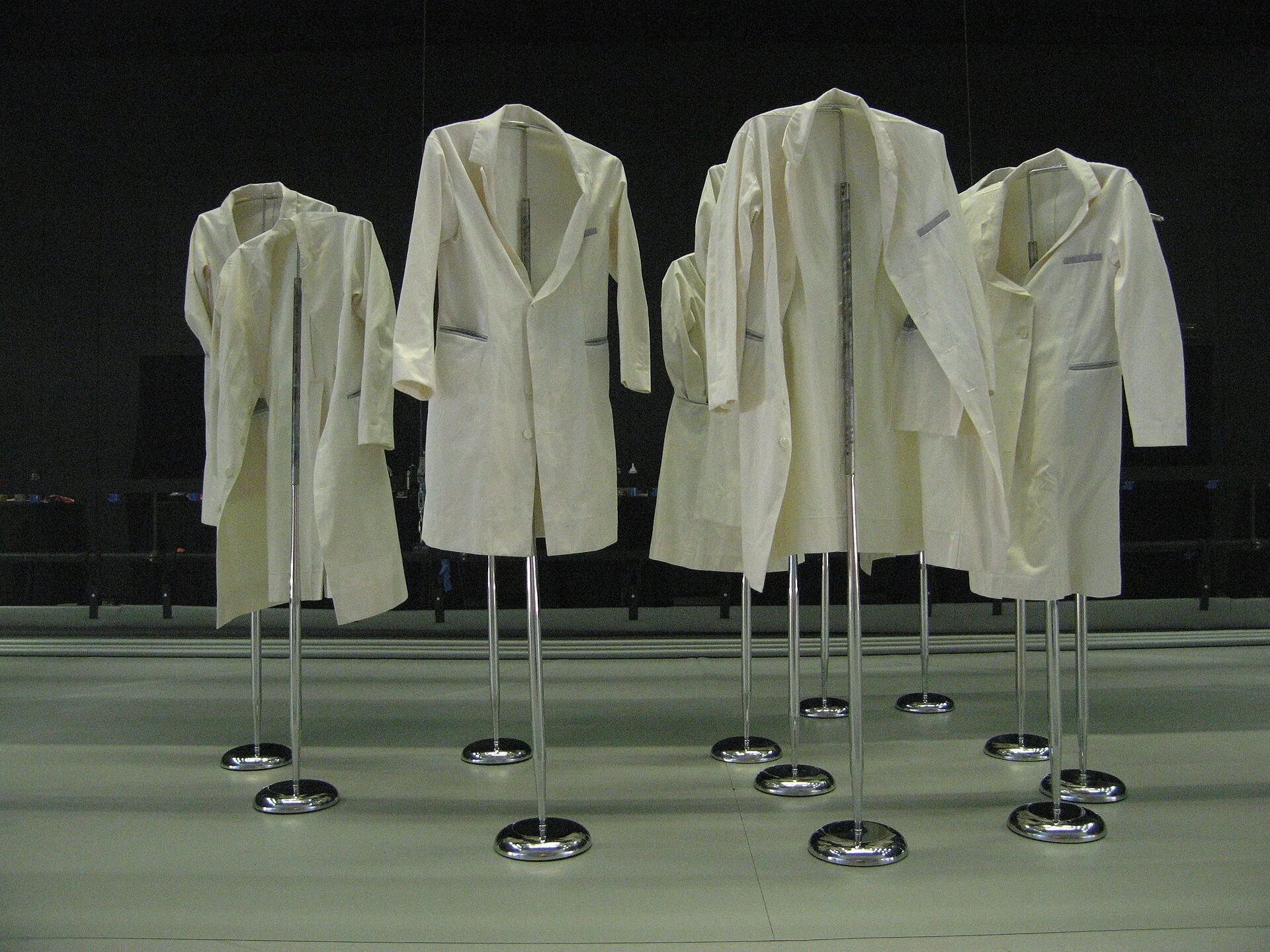
The Lab Coat Experiment:
Researchers gave participants the exact same white coat. Group A was told it was a medical doctor’s coat; Group B was told it was a painter’s smock. The results? Group A showed a massive increase in sustained attention and focus. The clothes didn't just change their look; they actively altered their mental processing.
When you put on a sharp blazer, or that dress that fits just right, you aren't just playing dress-up; you are priming your brain for abstract thinking and negotiation. Additionally, you are taking action against so-called, “imposter syndrome”. Conversely, staying in sweatpants all day signals to your brain that survival requirements are low, often resulting in a cognitive performance that matches the elasticity of your waistband. Simply put: we feel what we wear.
Part II: The 100-Millisecond Trial (How We Judge the Cover)
Now, let’s turn our gaze outward. Despite being told from childhood not to judge a book by its cover, Homo sapiens are notoriously lazy readers. We judge the cover instantly.
Princeton psychologists Janine Willis and Alexander Todorov (2006) discovered that it takes a mere 100 milliseconds for someone to form a definitive judgment about your attractiveness, trustworthiness, competence, and aggressiveness based solely on your appearance.
The Glaring Truth: Giving people more time to look didn't change their initial impressions; it only made them more confident in their split-second biases.
The Halo Effect: This is compounded by a cognitive bias where we assume that if someone is well-put-together, they must also be intelligent, kind, and organized.
If someone shows up to a professional meeting looking like they rolled out of a laundry hamper, human biology dictates that observers will subconsciously assume their organizational skills are equally chaotic. It is an unfair evolutionary hangover, but our ancestors survived by sizing up threats in the blink of an eye. So heres the lesson: judging isnt emotional, it’s nature not nurture. And if you know people are going to make assumptions, why not take control of the narrative.
Part III: The Shared Lexicon (Visual Storytelling and Connection Over Time)
If Part social survival dictates that we are judged instantly, how do we master this system? We do it by recognizing that appearance is not just a defensive shield; it is a dynamic, historical narrative designed to build human connection.
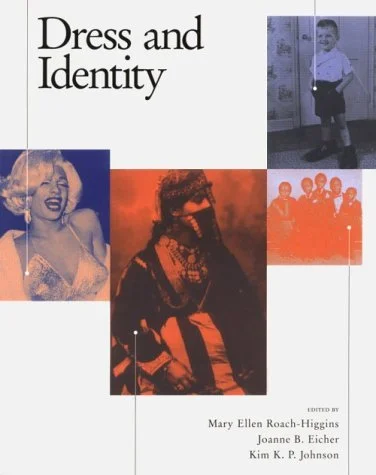
Sociologists Mary Ellen Roach-Higgins and Joanne Eicher famously classified clothing as a "visible sign system", a non-verbal language that operates across time. Rather than using appearance to isolate ourselves, humans historically use it to forge immediate empathy and solidarity. According to Herbert Blumer’s theory of Collective Selection, fashion trends do not emerge by accident; groups collectively choose styles that resonate with the current cultural mood, allowing individuals to align themselves with a shared human experience.
Consider how a single visual story can evolve over time to connect us all:
The 19th Century: Blue denim begins as rigid, utilitarian workwear, designed exclusively for miners and laborers to signal physical endurance and working-class survival.
The 1960s: The exact same fabric is adopted by civil rights activists and counter-culture youth, transforming denim into a visual manifesto of egalitarianism and social solidarity.
The Present Day: Today, denim has become a global, cross-class linguistic equalizer. A tech billionaire in Silicon Valley, a barista in Paris, and a student on campus can all wear the same denim jacket.
By participating in this historical archive, we use visual storytelling to satisfy two deeply human, simultaneous needs: the desire to express our individual narrative, and the profound psychological necessity to fit into a collective tribe. We dress well not to trick the observer, but to invite them into a shared conversation without saying a word.
The next time you stand in front of your closet, realize you aren’t just picking out pieces of fabric. You are writing the first paragraph of your daily autobiography, and contributing to a story we are all writing together. It pays to write it deliberately.