Full Canvas Isn’t The Finish Line, It’s The First Question Worth Asking
If you’ve spent any time researching quality tailoring, whether for a suit, sport coat, or jacket meant to live with you for years, you’ve almost certainly come across the term full canvas, a phrase often positioned as the ultimate marker of craftsmanship and quality, and while that reputation isn’t entirely undeserved, it has quietly become one of the most powerful, and misunderstood, marketing tools in modern menswear.
Because not all full canvas garments are built the same, and the difference isn’t subtle, theoretical, or academic, it’s something you feel every time you wear the garment and every year that passes.
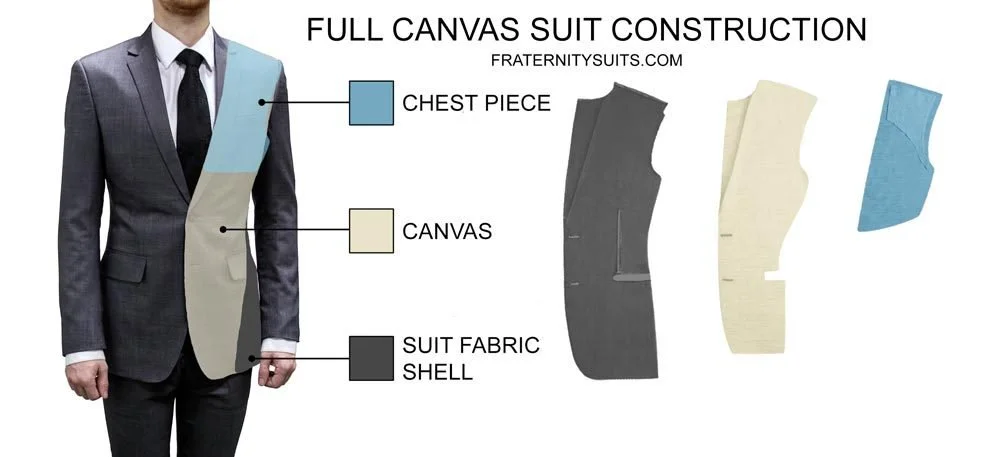
Image Source: Fraternity Suits
What The Canvas Actually Does
Inside every tailored jacket lives an unseen but essential layer called the canvas, which acts as the structural foundation of the garment, shaping how it drapes, how it moves, and how it responds to your body over time rather than simply sitting on top of it.
You don’t see the canvas, but you experience it constantly in the way the jacket settles on your shoulders, moves through the chest, and becomes more comfortable and personal the longer you own it. Without it, the fabric would just lay on you like a shirt.
In modern tailoring, there are two primary ways this canvas is constructed:
Fused canvas
Floating canvas
Both can technically be described as full canvas, but only one truly behaves the way the term implies.
Bards Clothing - Our Brooklyn Location
Fused Canvas: Structure By Adhesion
A fused canvas bonds the canvas to the outer fabric using heat and adhesive, a method that prioritizes efficiency and consistency, making it attractive for large-scale manufacturing and lower price points. At first, a fused jacket can look clean and structured, but time has a way of revealing what’s hidden beneath the surface.
With wear, heat, and humidity, the adhesive begins to break down, the fabric loses its natural movement, and issues like stiffness or bubbling can appear, leaving the garment flat and resistant rather than responsive. A fused canvas holds shape by force, not by craft.
Floating Canvas: Structure That Evolves
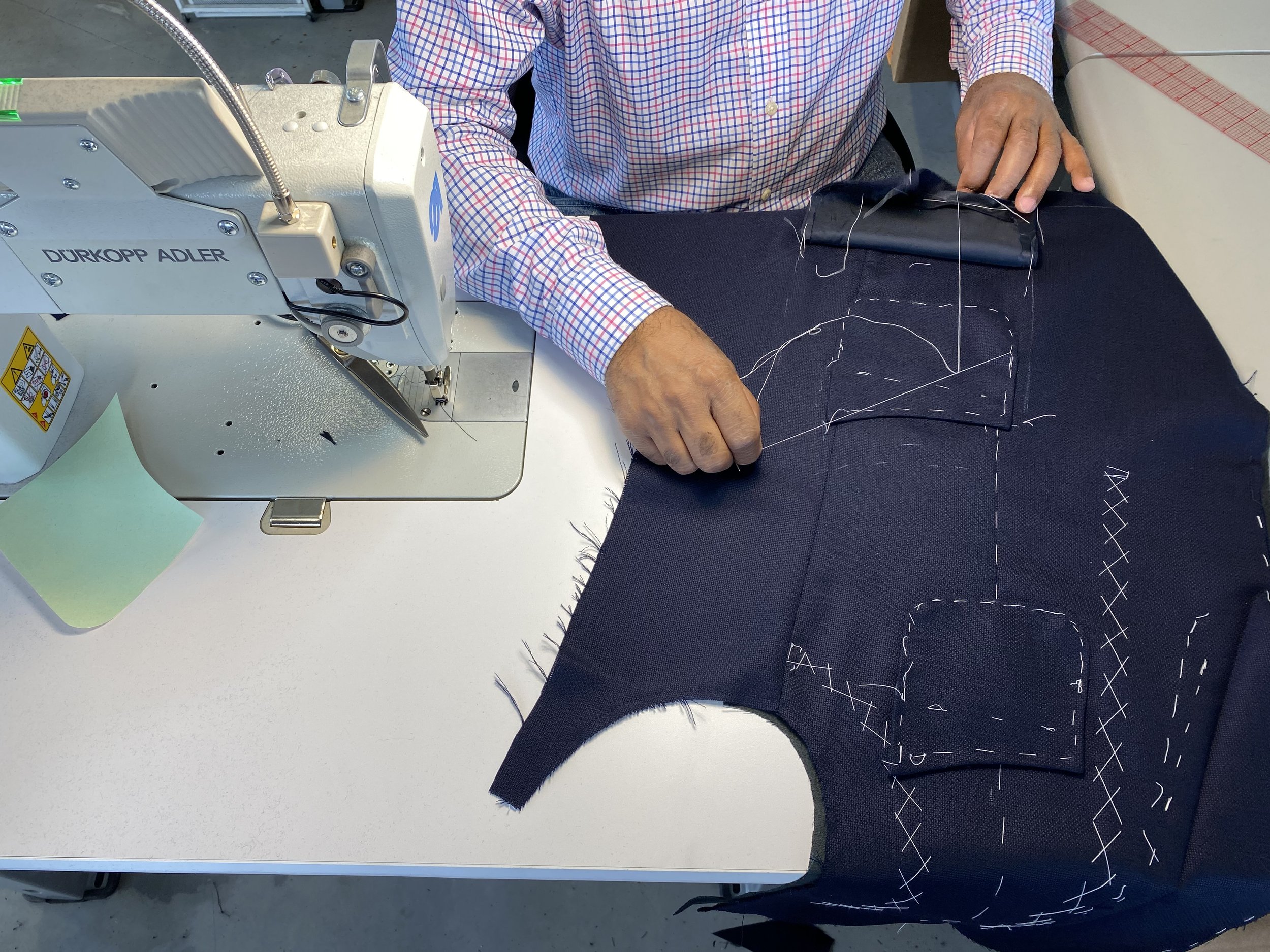
A floating canvas is not glued at all, but carefully stitched and allowed to move independently inside the garment, a process that takes more time, skill, and intention.
Over time, a floating canvas begins to learn your posture, your movement, and your habits, allowing the jacket to drape more cleanly, roll softly through the chest, and become increasingly comfortable the more it’s worn. Instead of breaking down, the garment breaks in. A floating canvas doesn’t fight the body, it works with it.
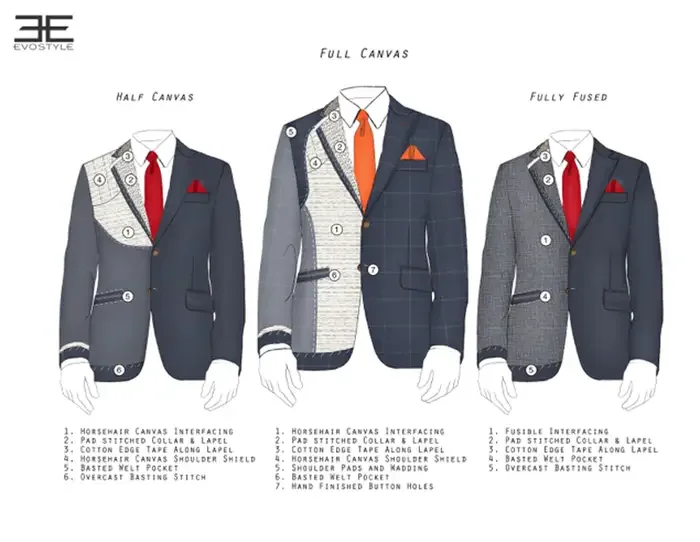
Source: Business Insider
Why Both Are Called “Full Canvas”
Technically, both constructions can extend through the full length of the jacket, which is why they fit under the category “full canvas”, even though the wearing experience is dramatically different. Over time, full canvas has become more reassuring phrase than educational one, meant to signal quality without inviting deeper questions.
The better question isn’t is it full canvas? It’s how is that canvas attached? Stitched or glued.
Why Bards Only Makes Floating Canvas Garments
At Bards, construction is never a checkbox or a buzzword, but a reflection of our belief that clothing should be built to live alongside the person wearing it. This carries over to why we make our clothing in America, where it’s made matters. And we offer a floating canvas suit made in America. We choose floating canvas because it aligns with everything we stand for: craftsmanship over shortcuts, longevity over disposability, and garments that improve with age rather than decline.
If we’re going to tell your story through clothing, it needs to be capable of carrying it for years, evolving as you do.
Every Bards jacket is made with a floating canvas because your clothing should meet you where you are, and move with you wherever you’re going.
Look Past The Label
Full canvas isn’t the destination, it’s the beginning of a deeper conversation. Because the difference between fused and floating canvas isn’t just technical, it’s philosophical. One is built for speed. The other is built for life.
And once you feel the difference, you’ll never hear full canvas the same way again.