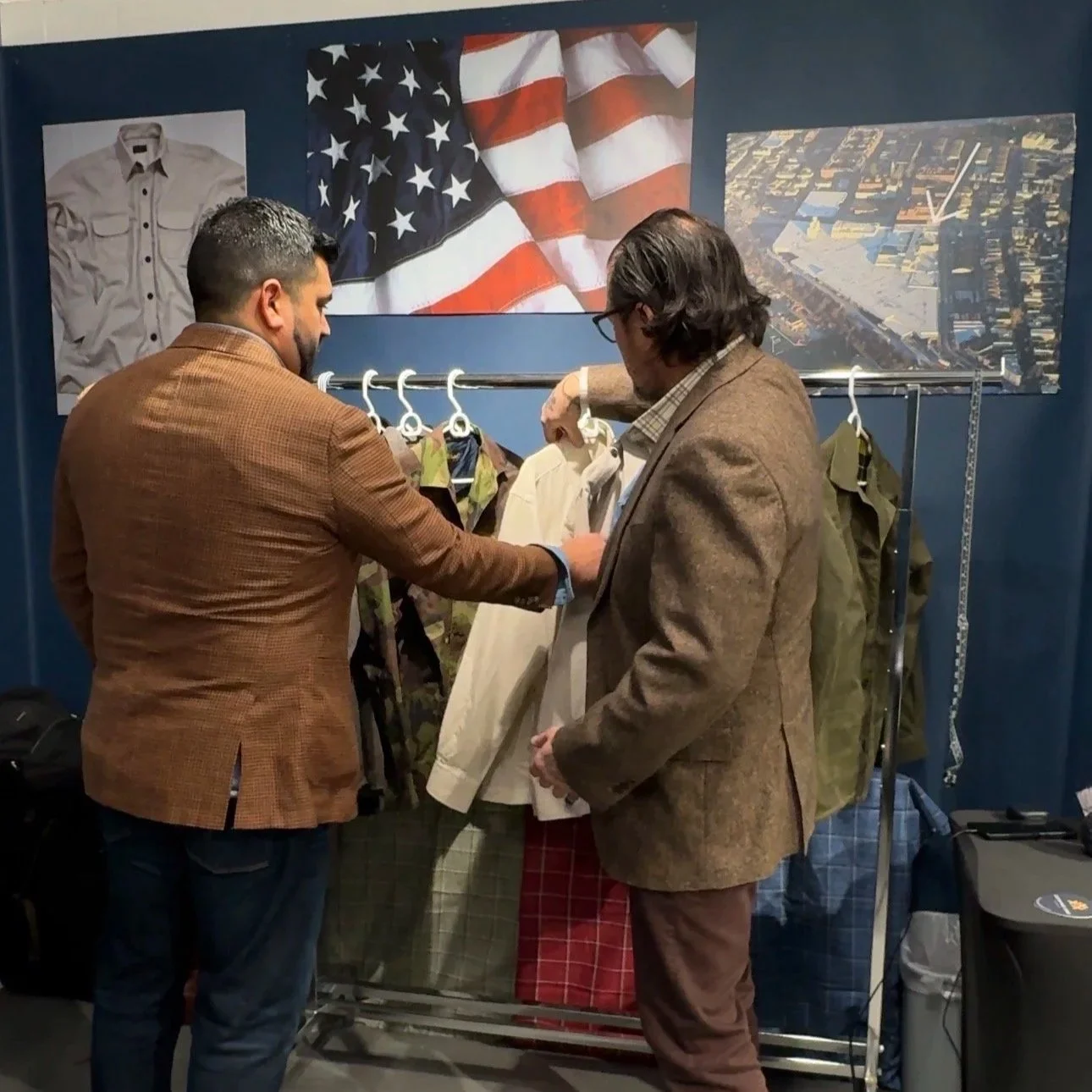
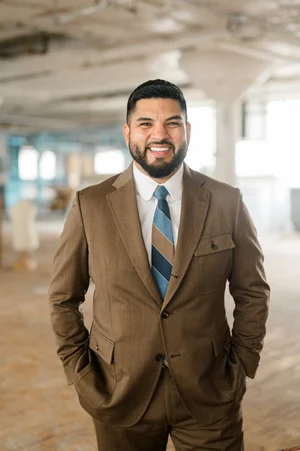
Chicago collective: where menswear opens a larger conversation
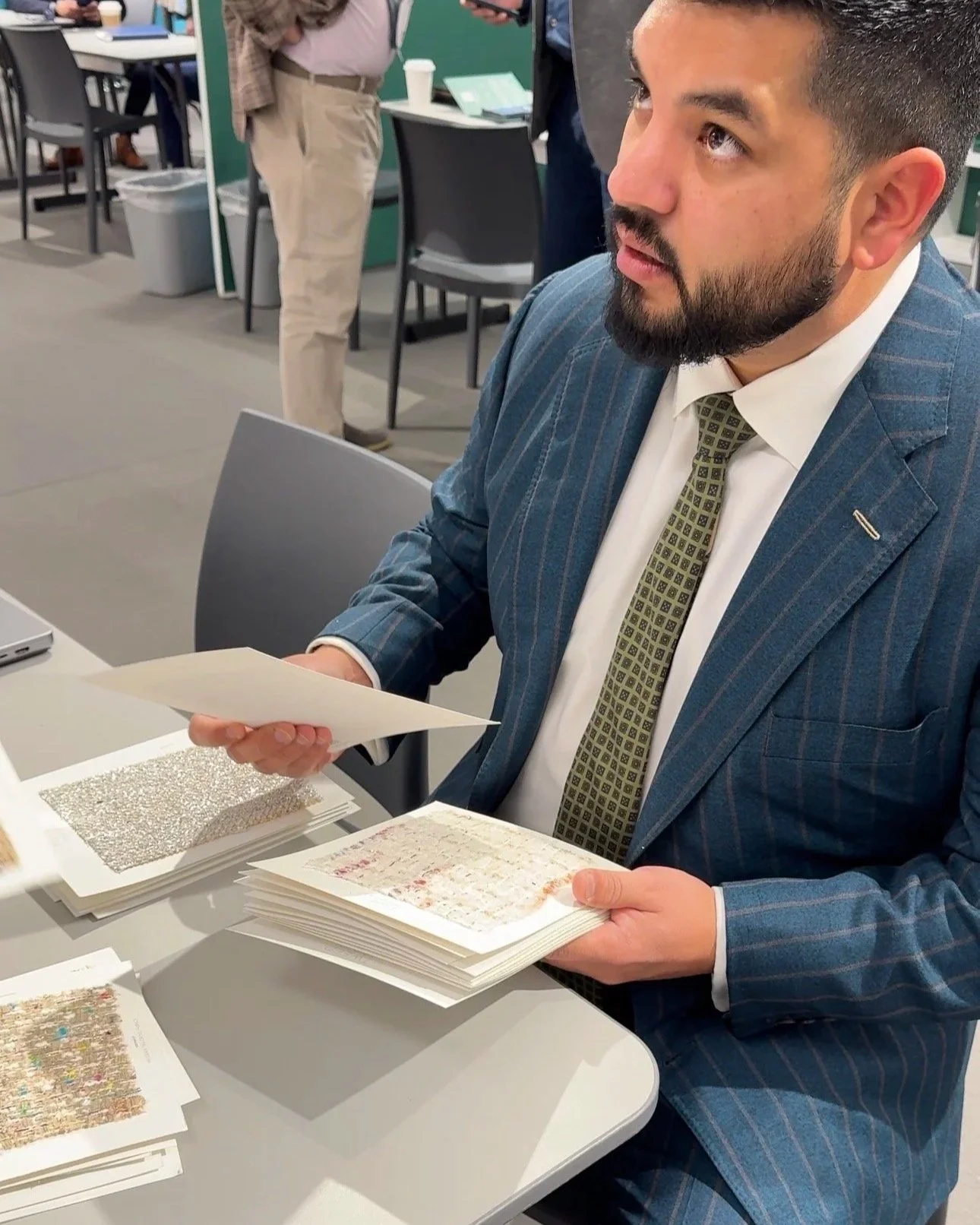
Viewing fabrics from Carnet
Last weekend I spent time at the Chicago Collective, one of the most established gatherings in mens clothing, and it served as a powerful reminder of why these trade shows still matter in an industry that often prioritizes speed over substance.
There is something grounding about being in a room filled with fabric houses, manufacturers, and custom clothiers, all taking the time to touch cloth, study texture, and engage in conversations that cannot be rushed or replicated through a screen.
The show floor was filled with beautiful fabrics that spoke quietly but confidently.
Wools with depth, resilience, and character, textures meant to be worn often, shaped by time, and eventually passed down, and manufacturers presenting work that still honors the idea that true craftsmanship requires patience, skill, and human hands.
Yet the most meaningful takeaway from the weekend had less to do with what was present and more to do with what is still largely missing.
The growing need for women’s tailored fabrics and garments
Throughout the weekend, one conversation continued to surface again and again, and that was the pressing need for more women’s fabrics and truly tailored garments designed specifically for women.
Not adaptations.
Not approximations.
And certainly not shortcuts disguised as customization.
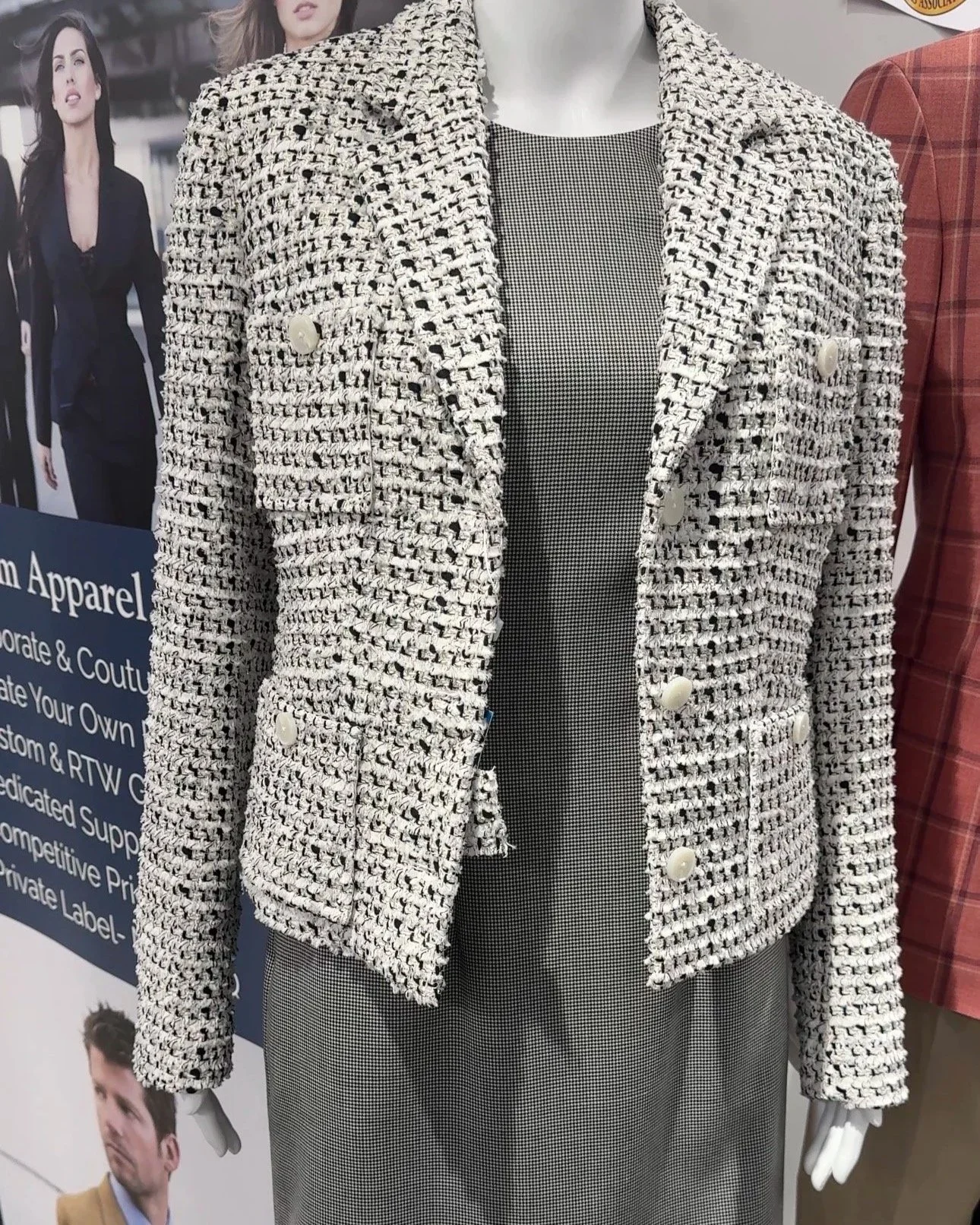
Couture design options
In much of the custom clothing world, women’s garments are still produced by manipulating men’s patterns, adjusting measurements, shifting proportions, and presenting the final result as bespoke or made to measure.
While this approach may function on a technical level, it often falls short in practice, because women’s bodies are not simply smaller versions of men’s bodies.
Women move differently, carry shape differently, and experience clothing differently, and they deserve patterns that are drafted intentionally from the ground up with those realities in mind.
Why true women’s patterns matter
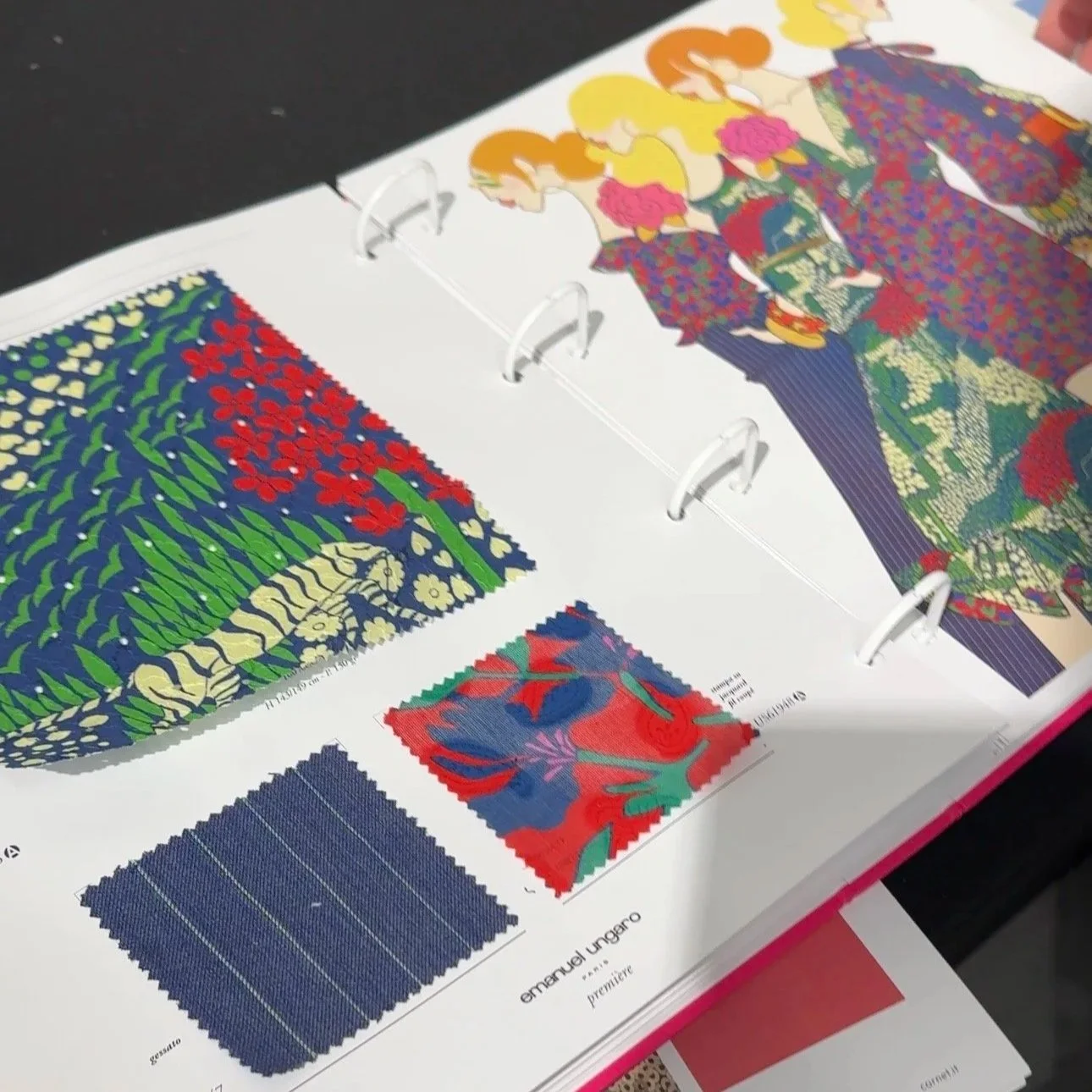
Stunning new books with artwork
At Bards Clothing, this is not a direction we are suddenly pivoting toward, but a principle that has guided our work from the beginning.
We work directly with factories that create true women’s patterns, patterns designed specifically for women’s bodies rather than altered menswear templates, and that distinction fundamentally changes how a garment feels, moves, and lives on the body.
When patterns are built correctly, fit improves naturally, movement feels intuitive rather than restrictive, and the garment becomes something you inhabit with confidence instead of something you constantly adjust or compromise with.
Custom clothing should feel empowering, thoughtful, and supportive, never like a concession.
Looking forward
Spending time at Chicago Collective reinforced a belief I hold deeply, which is that the future of custom clothing depends on slowing down, asking better questions, and expanding who we are truly designing for.
Women deserve the same depth of fabric selection, the same level of pattern-making expertise, and the same reverence for fit and construction that menswear has long enjoyed.
Trade shows like this remind me that meaningful progress is built through conversation, collaboration, and a shared respect for craft.
They also reaffirm why Bards Clothing continues to choose the harder path, because doing the work properly, with intention and care, is what ultimately gives a garment its soul.
Every stitch has a soul.
And every body deserves a garment built for it.