King Cotton, Slavery, And The Fabric Of America
Every time I bring up the Founding Fathers, especially my ride-or-die, George Washington, someone inevitably shouts, “You know Washington had slaves!” Yes. I do. History is complicated, not curated. It’s flawed, uncomfortable, and very human, just like the present. Two hundred and fifty years from now, someone will look back at us, our gas-guzzling cars, our healthcare systems, the things we normalize without blinking, and render their verdict. Being educated isn’t about pretending the past was perfect or condemning it with a 2025 lens; it’s about understanding context, holding tension, and asking how we move forward wiser than we were before.
There was a time when cotton was not just a crop in America. It was the economy.
By the mid-1800s, cotton accounted for more than half of all U.S. exports by value. It earned the name “King Cotton” because it fueled global industry and clothed much of the Western world. But its dominance did not happen in isolation, and it did not happen ethically.
The Foundation: Slavery In A Revolutionary Era
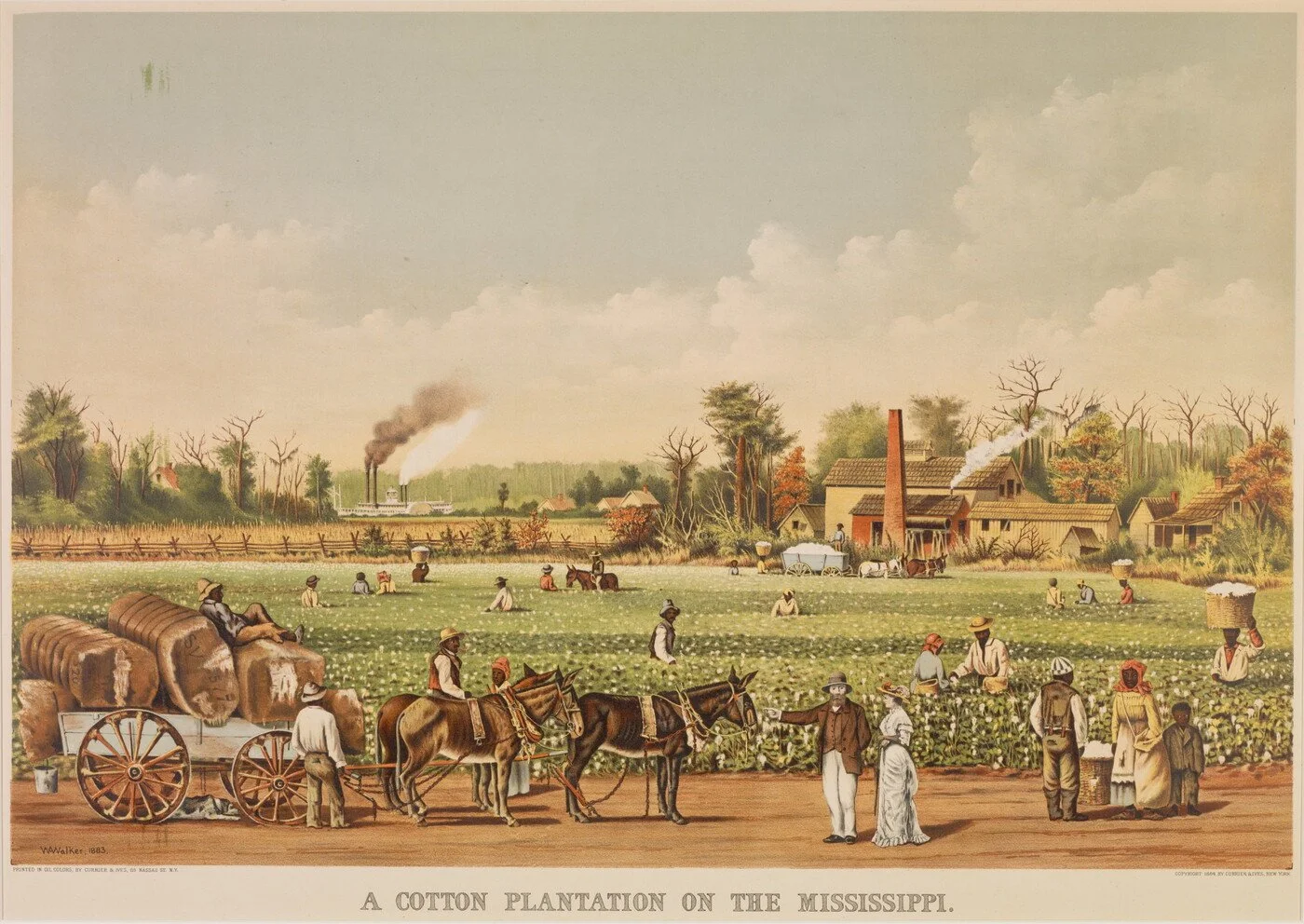
To understand American cotton, we have to place it in its global moment.
In 1776, the American colonies declared independence. In 1789, the French Revolution reshaped Europe. At the same time, Britain was entering the Industrial Revolution, mechanizing textile production and building mills capable of spinning and weaving cloth at unprecedented speed.
In 1793, Eli Whitney patented the cotton gin. The machine made short-staple cotton highly profitable across the American South. Rather than reducing labor, it intensified demand. As British mills, especially in Lancashire, required enormous quantities of raw fiber, the American South supplied it through enslaved labor.
Between 1790 and 1860, the enslaved population in the United States grew from roughly 700,000 to nearly four million people. By 1860, the U.S. was producing nearly two-thirds of the world’s cotton supply.
The overwhelming majority of that cotton, estimates range from 75 to 80 percent before the Civil War, was exported, primarily to Britain, with additional shipments to France and other European nations. There, it was spun and woven into textiles.
Most of that textile output was used for clothing. Cotton had become the dominant fabric for shirts, dresses, undergarments, uniforms, and workwear across Europe and North America. It was breathable, washable, and adaptable to industrial-scale production. By the mid-19th century, cotton textiles made up the largest share of global cloth manufacturing.
Even domestically, cotton quickly overtook wool and linen as the everyday fabric of Americans. By the late 1800s, the majority of clothing worn by Americans, especially the working and middle classes, was cotton-based.
While Europe debated liberty and industrial progress, American plantations intensified slavery to feed that demand. Cotton harvested by enslaved people clothed factory workers in England, merchants in France, and families across the Atlantic world. The Industrial Revolution and American slavery were economically intertwined.
Any honest conversation about American clothing begins there.
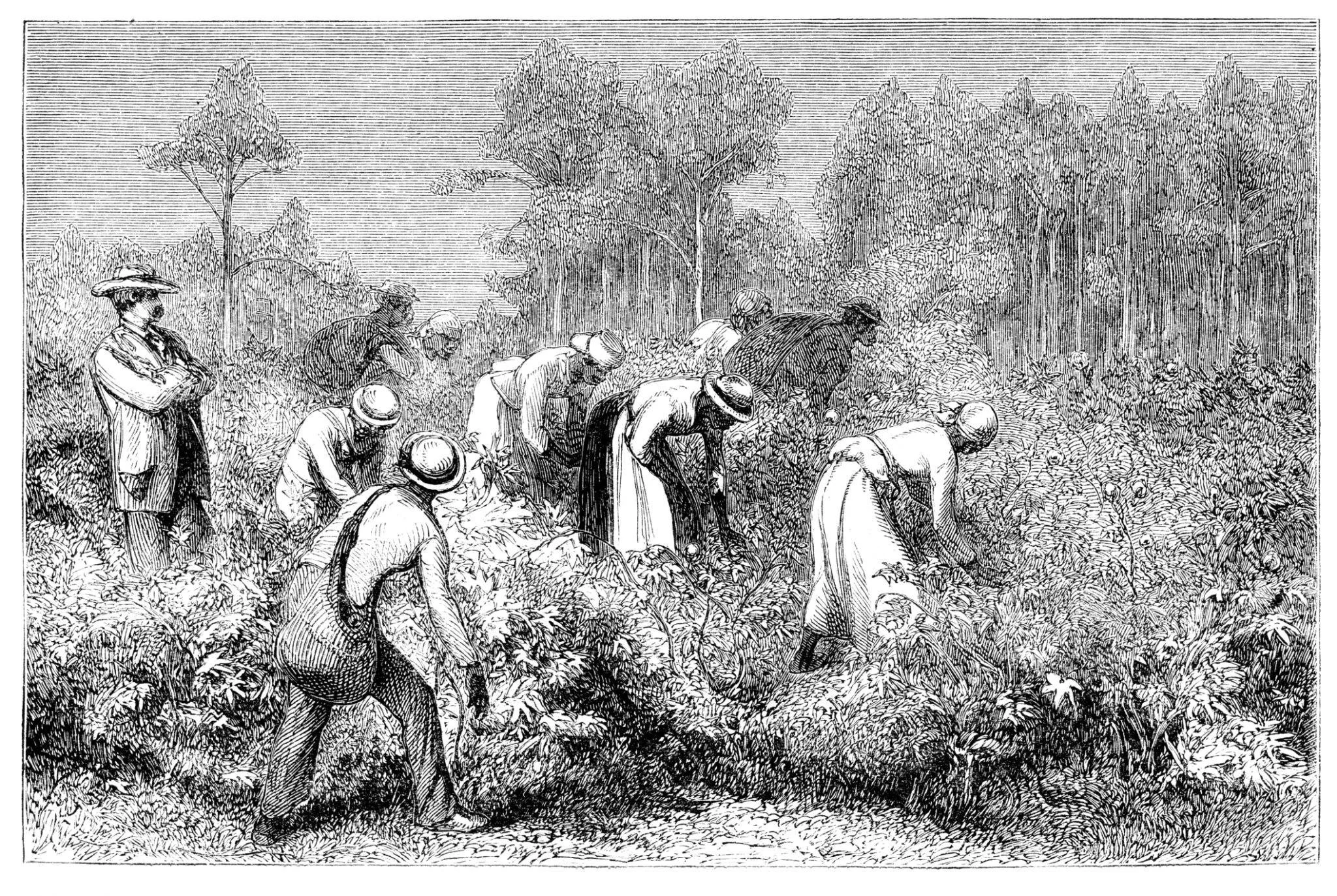
From Fiber To Fabric
For much of the 19th century, the United States exported raw cotton while Britain controlled much of the manufacturing value. Over time, especially after the Civil War, textile production expanded domestically. Mill towns in New England and later the Carolinas grew rapidly, and the U.S. became both a cotton producer and a significant textile manufacturer.
Fiber, mill, and garment were once more closely connected. A large portion of domestically grown cotton was eventually spun and woven within the United States for American clothing markets.
The Fracture
The United States still grows vast amounts of cotton today, particularly in states like Texas and Georgia. What changed is where it is processed.
Beginning in the mid-20th century and accelerating through the 1970s, 80s, and 90s, American textile mills closed as production moved overseas. Much of the cotton grown in America is now exported to countries such as China, Vietnam, Pakistan, and Turkey, where it is spun into yarn, woven into fabric, and sewn into garments.
The result is a fractured supply chain. The fiber may begin in American soil, but the clothing is often made oceans away.
Where That Leaves Us
The history of American cotton is layered. It is a story of innovation and industrial growth, but also exploitation and injustice. It built global wealth. It clothed nations. And it did so through systems that carried immense human cost.
Today, cotton still dominates global apparel production. The difference is not the fiber, it is the structure around it. The question now is whether we can build a clothing industry that honors labor, transparency, and longevity from the beginning.
From field to fabric.
From history to responsibility.