Let's talk about proportions. Not the kind you learned in math class (don't worry, there won't be a quiz), but the kind that can make the difference between an outfit that looks effortlessly put together and one that feels like something is just a little... off.
When we talk about dressing well, the conversation usually gravitates toward color, patterns, fabrics, or the latest trends. But one of the most overlooked elements of getting dressed is proportion. It's the relationship between the different parts of your outfit, how they interact with your body, and how they create a sense of visual balance.
Think about it this way: you can have a beautiful jacket, a great pair of trousers, and an expensive pair of shoes, but if all three are fighting for attention or aren't working together, the outfit can feel disconnected. Dressing well isn't necessarily about buying better clothes. Sometimes it's about understanding how the clothes you already own work together.
And the good news? You don't need a fashion degree to figure this out.
First, what exactly are proportions?
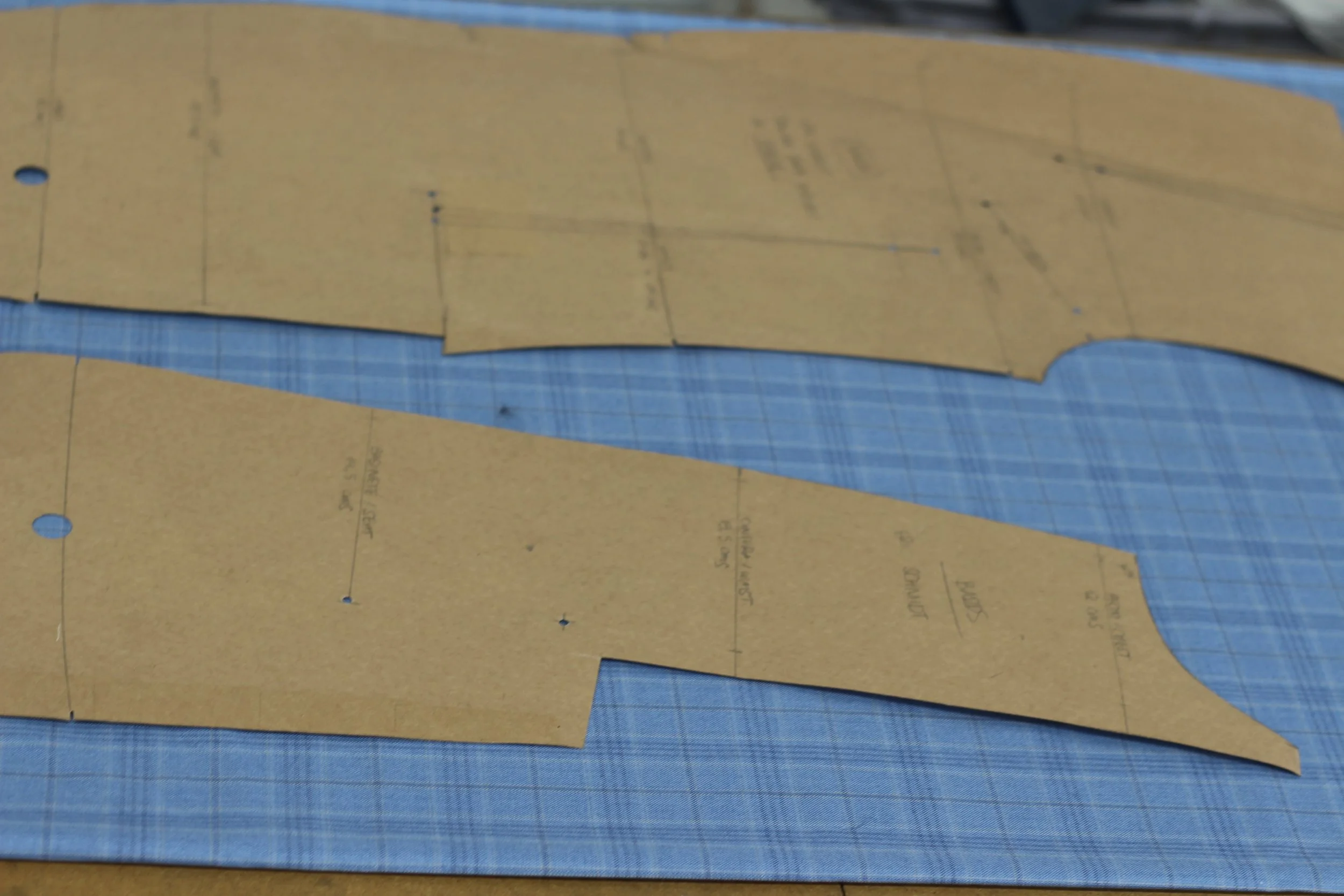
In clothing, proportion refers to the relationship between the size, length, width, and visual weight of different garments in relation to your body and to one another.
A few examples:
The length of your jacket compared to the length of your legs.
The width of your trousers compared to the shape of your upper body.
The placement of your waistband and how it affects the appearance of your torso.
The size of your lapels, collar, or accessories compared to your overall frame.
The relationship between an oversized sweater and the trousers you're wearing with it.
These details influence how the eye moves across an outfit. They can make your legs appear longer, create more definition at the waist, add visual structure to your shoulders, or bring balance to a silhouette.
The goal isn't to make everybody look the same or fit into some imaginary ideal body type. It's to understand how clothing interacts with your individual frame so you can make more intentional decisions.
Understanding your body's proportions
Rather than assigning clothing rules to particular genders, it's more useful to understand the individual characteristics of your frame. People come in all shapes, sizes, and combinations of proportions, and the same styling principles can be applied to just about everyone.
1. Consider the relationship between your torso and legs.
One of the easiest ways to influence your overall proportions is by changing where your clothing visually divides your body.
The rise of your trousers (the distance between the crotch seam and the top of the waistband) plays a significant role here. A higher rise can create the appearance of longer legs by raising the perceived waistline. A lower rise can visually lengthen the torso and shorten the appearance of the legs.
If you have a shorter torso, you might find that a mid-rise trouser creates a more comfortable visual balance. If you have a longer torso, a higher rise may help create a different relationship between your upper and lower body.
Neither is inherently better. It's about understanding what works with your frame and the silhouette you're trying to achieve.
2. Pay attention to the relationship between your shoulders and hips.
The width and structure of your upper body influence how the rest of your outfit comes together.
If you have broader shoulders, or a fuller chest, a little more volume through your trousers or lower half can create visual balance. If you have wider hips, adding structure or visual interest through your upper half can create a different sense of balance.
If your shoulders and hips are relatively aligned, you have plenty of opportunities to experiment with defining your waist, playing with volume, or creating a more relaxed silhouette.
The important thing is to think about the visual weight of your clothing. You don't necessarily need to make everything symmetrical. You simply want the different elements to feel intentional together.
3. Balance volume with volume.
Oversized clothing isn't going anywhere, and honestly, I'm not mad about it. But wearing oversized pieces from head to toe can sometimes make it difficult to see the shape of your outfit.
If you're wearing a voluminous blouse, sweater, or jacket, try pairing it with a more tailored trouser. If you're wearing wide-leg trousers, consider a more structured or fitted top.
This is sometimes called balancing volume, and it's one of the easiest styling tricks to incorporate into your everyday wardrobe.
Of course, you can absolutely wear an oversized top with oversized trousers. The key is making sure the silhouette feels intentional rather than accidental.
4. Understand your jacket length.
The length of a jacket has a tremendous influence on your overall proportions. A traditional tailored jacket generally extends far enough to cover the seat, although the ideal length depends on your height, build, and the silhouette you're trying to achieve.
A jacket that's too long can make your legs appear shorter, while one that's too short can make your torso look disproportionately small.
If you have a shorter frame, a slightly shorter jacket (within the boundaries of good tailoring) can help create the impression of longer legs. If you have a longer torso, additional jacket length may help maintain visual balance.
This applies to everything from tailored blazers and sport coats to casual jackets and outerwear.
5. Don't underestimate hemlines.
Where a skirt, dress, jacket, or top ends can change the way your body is visually divided.
For example, a top that ends at the widest part of your hips can draw attention to that area. A slightly shorter or longer hemline may create a more fluid silhouette.
The same applies to skirts, dresses, and trousers. The relationship between the hemline and your natural proportions can make a garment feel more balanced.
Don't be afraid to experiment with a few different lengths. Sometimes moving a hemline up or down just an inch or two can completely change how a garment looks.
6. Consider the smaller details.
Proportion isn't always about big changes. Sometimes half an inch makes all the difference.
Think about:
Sleeve length: The relationship between your sleeve and your wrist can influence how polished a jacket or shirt looks.
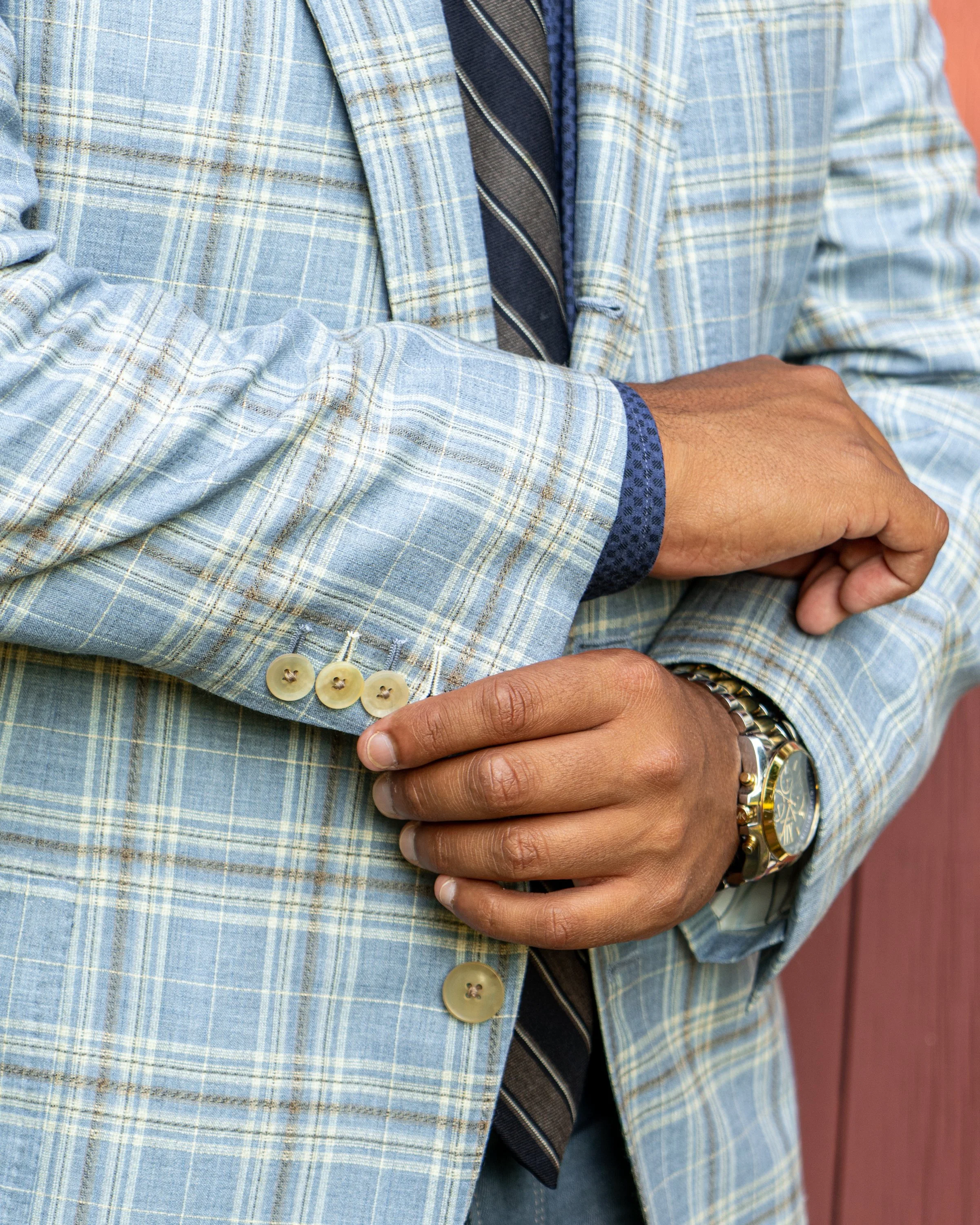
Cuffs: When wearing a tailored jacket, allowing approximately a quarter to half an inch of shirt cuff to show creates a traditional, balanced appearance.
Collars and lapels: The size of these details should work with your overall frame and the scale of the garment.
Footwear: Shoe shape, sole thickness, and heel height can influence the visual weight of your entire outfit.
These little details add up, and they're often what separates an outfit that looks considered from one that simply looks like you got dressed.
The magic is in the relationship between garments.
Here's something I wish more people understood: you can't always evaluate a garment on its own.
A pair of trousers might look fantastic on a hanger, but when you put them on with a particular shirt or jacket, the proportions might not work. Likewise, a jacket that looks a little underwhelming on its own might become the perfect piece when paired with the right trousers.
This is why getting dressed is as much about understanding relationships as it is about understanding individual pieces.
A few everyday things to experiment with:
Try a different tuck. Fully tucking in your shirt, doing a French tuck, or leaving it untucked changes where your body appears to divide.
Change your footwear. A different shoe shape, sole thickness, or heel height can influence the visual weight of your entire outfit.
Experiment with your waistband. Try moving your trousers slightly higher or lower and see how it changes the relationship between your torso and legs.
Play with layers. A cropped jacket over a longer shirt creates a different silhouette than a jacket and shirt that end at similar lengths.
Take a photograph. Sometimes an outfit looks completely different in a mirror than it does in a photograph. Seeing yourself from a little distance can help you identify where something feels unbalanced.
You don't need to buy anything new to start experimenting. In fact, I'd encourage you not to.
Where custom clothing changes the conversation.
Now, this is where things get particularly interesting for us.
One of the biggest advantages of custom clothing is that we aren't starting with a predetermined garment and trying to make your body fit into it. We're starting with your body, your preferences, and the silhouette you want to create.
Ready-to-wear clothing is generally produced around standardized measurements and proportions. Even when you find something that fits reasonably well, the relationship between the garment's individual measurements might not be quite right for you.
Maybe you're tall with a shorter torso. Maybe you have broad shoulders but a relatively narrow waist. Maybe you have a longer rise, fuller thighs, or a difference between your left and right sides. These are all perfectly normal variations in the human body, but they're not always accounted for in standardized sizing.
With custom clothing, we have the ability to address those relationships.
We can adjust jacket length, trouser rise, leg width, shoulder structure, sleeve length, waist placement, and countless other details to create a garment that works with your proportions rather than against them.
And there's another important distinction: custom clothing isn't simply about making something tighter or looser. It's about understanding how the garment is constructed and how its individual elements work together. Sometimes the solution isn't taking something in. It's changing the balance, moving a seam, adjusting the rise, or rethinking the silhouette entirely.
That's the difference between simply fitting into clothing and having clothing designed around you.
The takeaway: dress with intention, not by a rulebook.
I don't believe there is one correct way to dress, and I certainly don't believe that everybody needs to follow the same set of fashion rules. Your body isn't a problem that needs to be corrected, and clothing shouldn't be an exercise in trying to disguise yourself.
But understanding proportions gives you something incredibly useful: the ability to make informed decisions.
You'll start recognizing why certain jackets work better than others, why you gravitate toward particular trouser rises, why some outfits feel more balanced, and why a simple change in length or volume can make such a difference.
The next time you get dressed, take a moment to look at the relationship between your top and bottom, your waistline and your hemline, or your jacket and your trousers. Experiment a little. Move things around. Try something you wouldn't normally wear.
You might discover that the clothes you already own have a lot more potential than you thought.
And if you find yourself wanting something that fits your proportions a little more intentionally, well, that's what we're here for.
Because good clothing shouldn't ask you to change your proportions. It should understand them.