The Real Question Isn’t Why A Suit Costs $3,895. It’s Why One Costs $200.
Walk into any clothing store and you’ll see it.
Two suits.
One costs $3,895.
Another costs $200.
And the natural reaction is almost always the same.
How on earth can a suit cost nearly five thousand dollars?
It’s a fair question. But it’s the wrong one.
The better question, the one that should really make us pause, is this:
How on earth can a suit cost $200?
Because when you actually follow the journey of a garment, the economics start to feel less like manufacturing and more like a magic trick.
Let’s pull the curtain back.
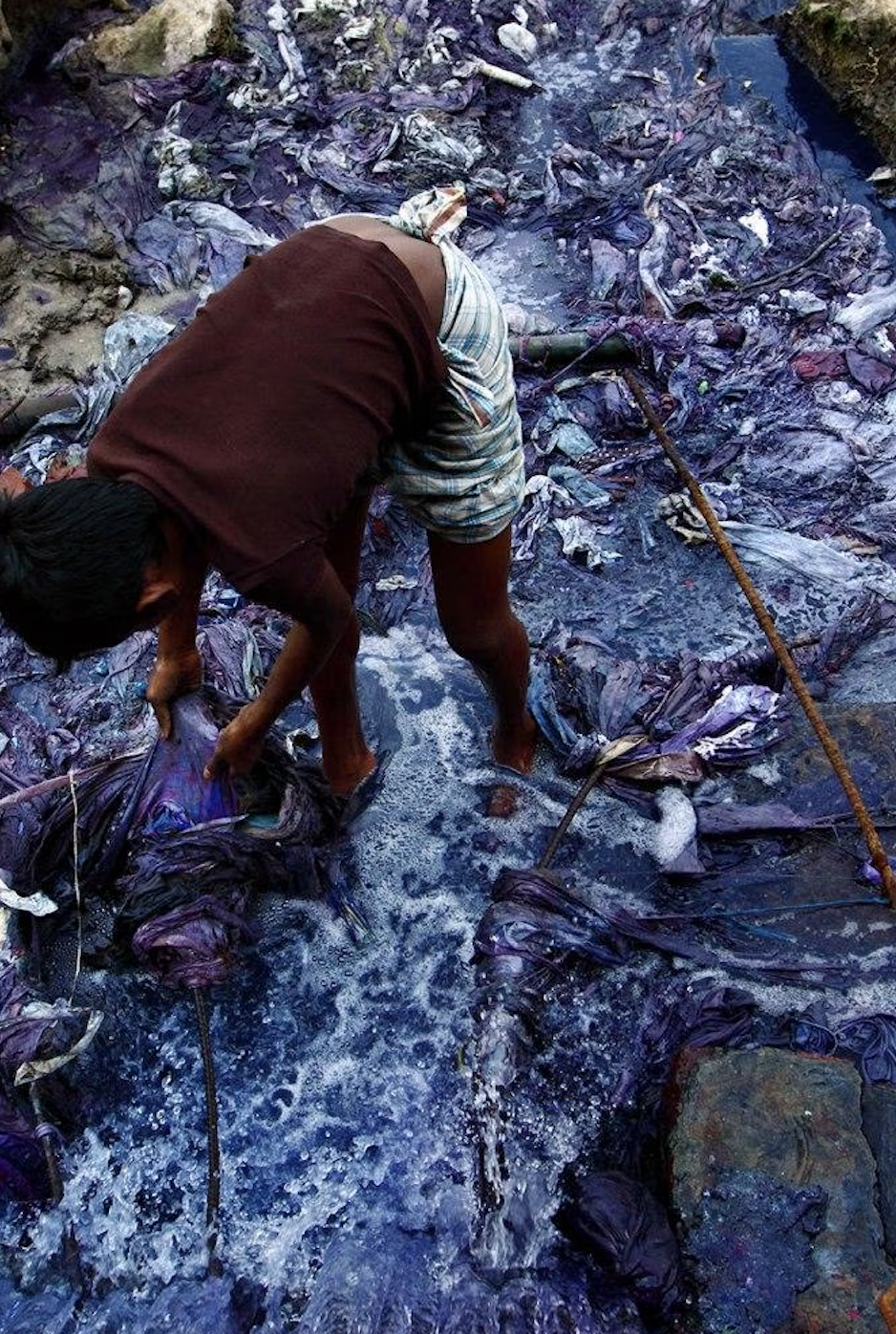
Step One: The Fabric Takes A World Tour
Before a suit becomes a suit, it begins as raw material.
Let’s say we’re talking about cotton. That cotton might be grown in India. It could then be shipped to Pakistan to be spun into yarn. From there it might travel to China where the yarn is woven into fabric. Then perhaps it’s dyed in Vietnam or finished somewhere else entirely.
At this point the cloth that will become your jacket and trousers has already traveled through four different countries.
And we still haven’t made the suit.
Textiles today are part of a massive global relay race. Each country handles a small piece of the process because it’s cheaper that way. Labor costs differ. Environmental regulations differ. Infrastructure differs. So the fabric keeps moving until it becomes the lowest possible cost version of itself.
The end result? A piece of cloth that has already circled a good portion of the planet before a single pattern piece is cut.
Step Two: The Shipping Begins
Once the fabric is ready, it has to get to the factory where the suit will actually be assembled.
So it travels again.
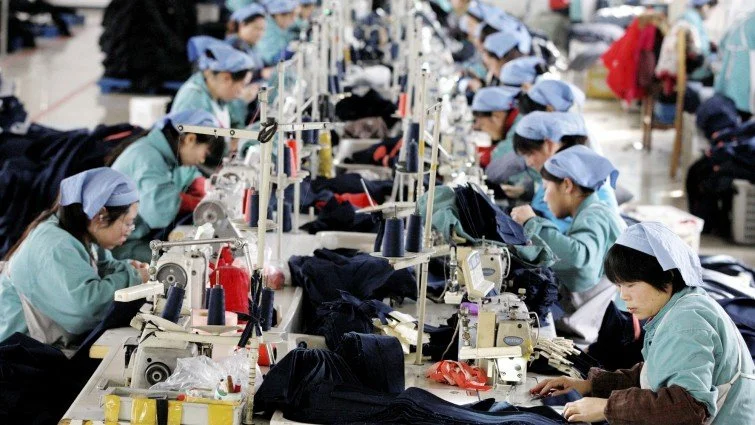
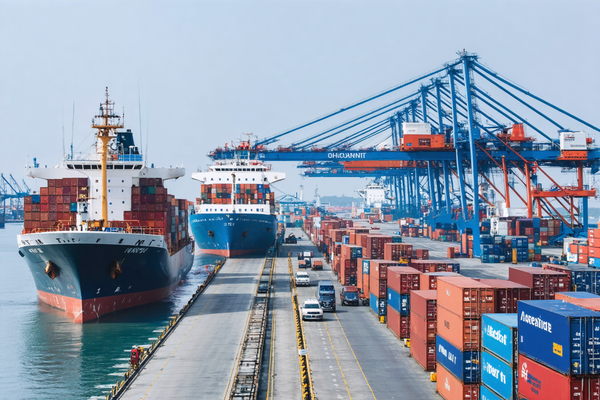
First a truck carries it to a port. Then it’s packed into a shipping container and loaded onto a cargo ship the size of a floating city. That ship crosses an ocean before docking somewhere else entirely. From there the fabric might move by rail inland. Then another truck takes it to the factory.
By the time everything is said and done, a garment can easily travel 15,000 to 30,000 miles before it ever touches a store hanger.
And yet somehow, this world-spanning logistical ballet still results in a $200 price tag.
Step Three: The Suit Is Built
A suit is not a single object. It’s a puzzle.
Depending on the construction, a suit jacket alone can contain 60 to 80 individual components.
The outer fabric.
The lining.
Canvas inside the chest.
Shoulder structures.
Sleeve heads.
Pocketing.
Buttons.
Interfacings.
Stitch reinforcements.
Every piece is cut, sewn, pressed, and assembled in stages.
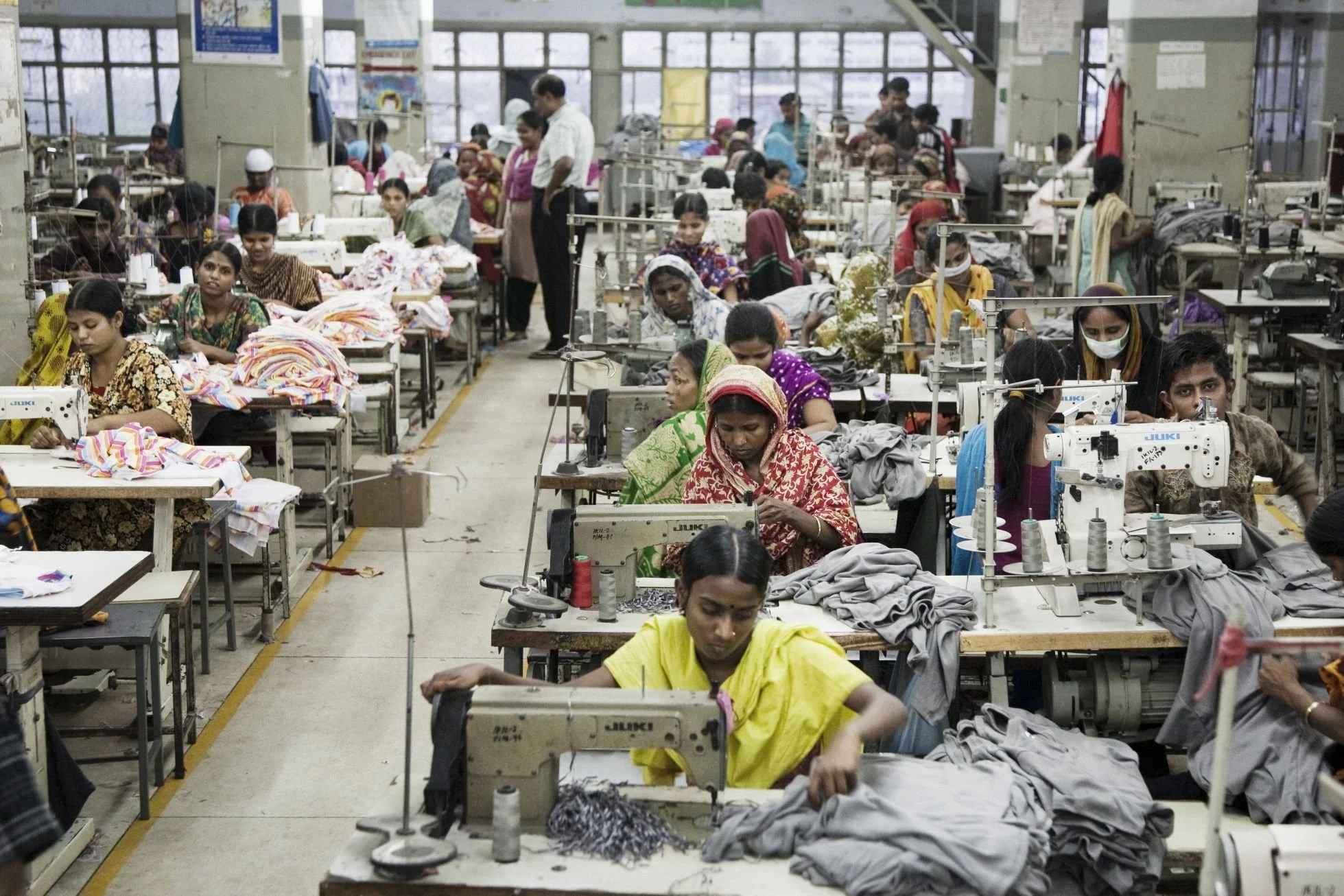
In most factories the jacket moves through a long chain of specialists: cutters, stitchers, pressers, finishers, inspectors. One person may only sew sleeves. Another may only close side seams. Someone else attaches buttons all day.
By the time the jacket is complete, it may have passed through 30 to 40 pairs of hands.
Which leads us to a curious reality.
All of those people. All of those materials. All of that work.
And the final suit still costs $200.
Step Four: The Retail Math
Here’s the part most people don’t realize.
If you buy a suit for $200 in a store, the store didn’t pay $200 for it.
Retail typically works on a markup of 2.5 to 3 times wholesale cost.
So that $200 suit likely landed in the store for somewhere around $60–$70.
That number needs to cover:
The fabric.
The labor.
The shipping across oceans.
The factory overhead.
The brand’s profit.
The transportation to the store.
Everything.
At this point, the real question starts to feel unavoidable.
How?
Step Five: The Cost Didn’t Disappear
Cheap clothing doesn’t magically eliminate costs.
It simply moves them somewhere else.
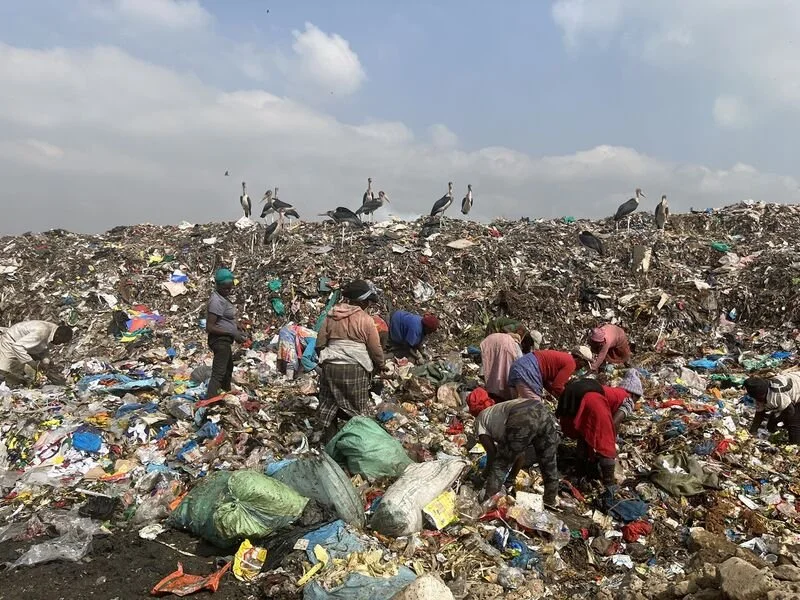
When garments are made for incredibly low prices, something has to give. Sometimes it’s wages. Sometimes it’s environmental protections. Sometimes it’s durability. Often it’s all three.
Factories are pushed to produce faster. Materials are chosen for cost instead of longevity. Garments are designed for short life cycles because the system expects you to replace them quickly.
The result is clothing that’s cheap at the register but expensive in ways we rarely see.
In landfills.
In polluted waterways.
In the pressure placed on workers and manufacturers to continually cut corners.
The Question Worth Asking
So when someone asks why a suit costs $3,895, the answer is fairly simple.
It reflects time.
Skill.
Materials.
Craftsmanship.
And a supply chain that isn’t designed purely around the lowest possible cost.
But the real mystery isn’t expensive clothing.
The real mystery is cheap clothing.
Because when a garment travels across oceans, passes through dozens of hands, and still lands on a rack for $200…
the real question becomes: how is that even possible?
And once you start asking that question, you may never look at a price tag the same way again.